
A sloped yard doesn’t mean no pool. If anything, a little elevation can work in your favor. Think great views, different levels for different uses, and a design that looks like nobody else’s. It does need good planning, solid engineering, and a builder who’s done this before.
Austin adds its own twist, with rocky ground, uneven lots, and tricky soil. So it’s worth knowing what you’re working with before anyone starts digging. Here’s what to think about, from drainage and retaining walls to design and cost.
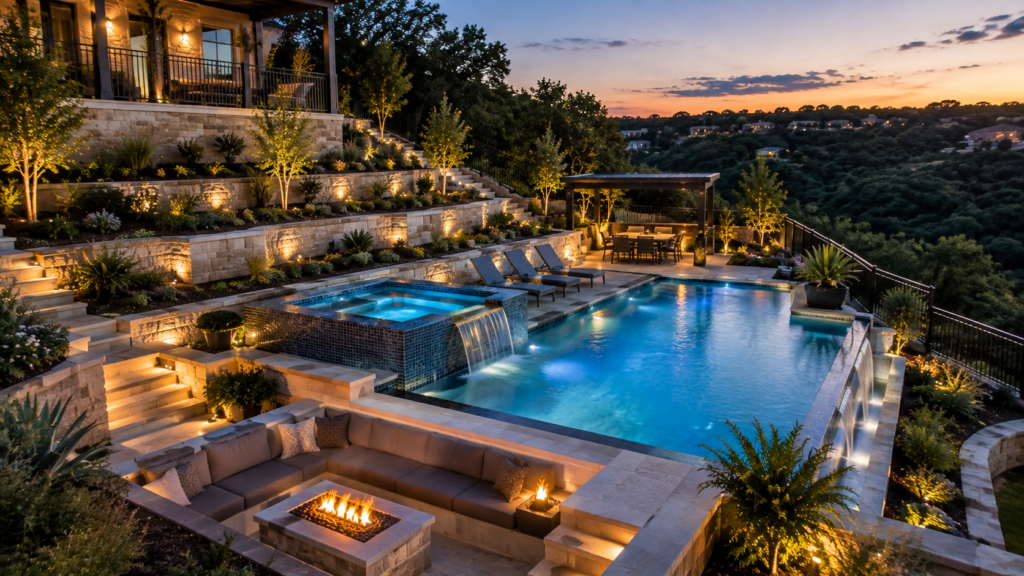
7 Things Should You Know Before Building a Pool on a Sloped Backyard in Austin
1. Evaluate Your Backyard’s Slope and Soil Conditions
Start by figuring out how steep your yard really is and what’s under it. Some Austin lots sit on limestone. Others have clay that swells and shrinks with the moisture.
Either one can change how your crew digs, what the foundation needs, how drainage works, and what you end up paying.
A site evaluation will cover the elevation changes, soil, access, and any likely trouble spots. Depending on the property, you may also need a topographic survey and a geotechnical assessment.
It’s much cheaper to learn all this up front than to rework the plan halfway through the build.
2. Choose the Right Sloped Backyard Pool Design
A good sloped backyard pool design makes the most of the lot’s shape. Instead of flattening the whole yard, let the elevation be part of the design.
A few popular ways to do that:
- Infinity-edge pools: The water seems to run right off into the view.
- Raised pools: The pool sits up high to make up for the change in ground level.
- Terraced pool areas: Separate levels for swimming, lounging, dining, and hanging out.
- Retaining-wall pools: Engineered walls hold the slope back around the pool.
What’s best for you depends on the slope, your space, the view, your budget, and how you’ll use the yard. Done well, the pool feels like it belongs there.
3. Understand Retaining Walls and Structural Requirements
On a slope, the biggest challenge is the soil around the pool. Cutting into a hillside changes the pressure on the ground and can leave areas that need extra support.
You may need retaining walls to keep the landscape stable, hold up terraces, or carve out flat areas you can actually use. They have to be designed around soil pressure, drainage, the site itself, and the engineering rules that apply.
The pool shell may need specialized engineering too, so it can safely handle the loads and the ground it sits on.
A standard flat-yard pool design won’t just work on a hillside. Proper structural planning protects the pool, your yard, and the buildings nearby.
4. Plan for Drainage and Water Management
Drainage matters a lot for hillside pools in Austin. Rain runs downhill, and if it isn’t managed, you can end up with erosion, standing water, and pressure building up behind your retaining walls.
Your design should account for where water goes before, during, and after construction.
Depending on the site, that could mean surface drains, well-planned grading, drainage channels, and drains behind the retaining walls. All of it should work together to move water away from the spots that need protection.
A good builder will also think about how pool overflow, deck runoff, and nearby landscaping behave in a heavy rain.
5. Prepare for Excavation Challenges and Project Costs
A pool on a hillside usually costs more than one on a flat lot. The final number depends on how tough the excavation is, the soil and rock, retaining walls, engineering, drainage, equipment access, and the pool design you pick.
If your lot has shallow bedrock or tight access for machinery, the crew may need specialized excavation methods. Raised pools and infinity edges add complexity, too.
Ask your builder for a detailed estimate that separates the pool from site prep, engineering, retaining walls, drainage, decking, and landscaping.
Build in a cushion, too. That way, if the ground throws you a surprise, you can handle it without cutting corners on anything important.
6. Check Permits, Access, and Local Requirements
Before work starts, find out which permits, inspections, and engineering documents your property needs. They can vary by location, design, drainage changes, and retaining-wall specs.
Also think about how crews and equipment will actually get into your backyard. A narrow side yard, a steep path, or close neighbors can slow down excavation and material delivery.
Sorting out these details early helps you avoid delays and surprise costs.
7. Work With an Experienced Austin Pool Builder
The right contractor matters even more on uneven ground. Look for a pool builder for sloped yards in Austin who knows site evaluation, structural coordination, drainage planning, and hillside challenges.
Ask to see past projects on similar lots, and ask how they handle difficult soil, retaining walls, and water.
If you’re planning a high-end backyard, a luxury pool builder in Austin can bring in things like infinity edges, custom lighting, outdoor kitchens, and multi-level patios and make them feel like one design.
A good team thinks about how it looks and how it holds up over time, right from the start.
Build Your Dream Sloped Backyard Pool With Westbank Pools
A sloped yard can turn into an amazing outdoor space when the design works with the land instead of against it. With solid engineering, smart drainage, careful planning, and the right team, you can build a pool that fits your property and your lifestyle.
Westbank Pools can help you explore custom pool designs that suit your backyard, your tastes, and your goals. Plan carefully, deal with the site challenges early, and your uneven Austin lot can become a great place to relax and entertain for years.

