A pool can turn a Killeen backyard into a real retreat. But the rolling terrain, rocky ground, and shifting elevations make it a lot trickier than building on a flat lot. Before anyone starts digging, it pays to think about how the land will shape your pool’s design, stability, and performance over time.
Two big pieces of that puzzle are retaining walls and drainage. Done right, they handle elevation changes, control where water goes, and make your pool area safer and easier to use. Knowing how they work will help you get ready for the project.
Why Does Killeen Require Special Pool Planning?
The Killeen is known for sloping lots, limestone, and soil that changes from one property to the next. Those features make for great views, but they can create headaches during construction.
A steep backyard may need extra excavation, grading, or structural support before a pool can go in. Rocky ground can change how the digging is done, what equipment is needed, and what the project costs.
That’s why pool construction in Killeen should start with a close look at your property. Once you understand the slope, soil, existing drainage, and elevation changes, it’s much easier to choose the right spot and the right building approach.
How Do Retaining Walls Support Pool Construction?
Retaining walls hold back soil and manage changes in ground level. They’re especially handy when your backyard slopes sharply or the pool needs a level place to sit.
Creating a Level Pool Area
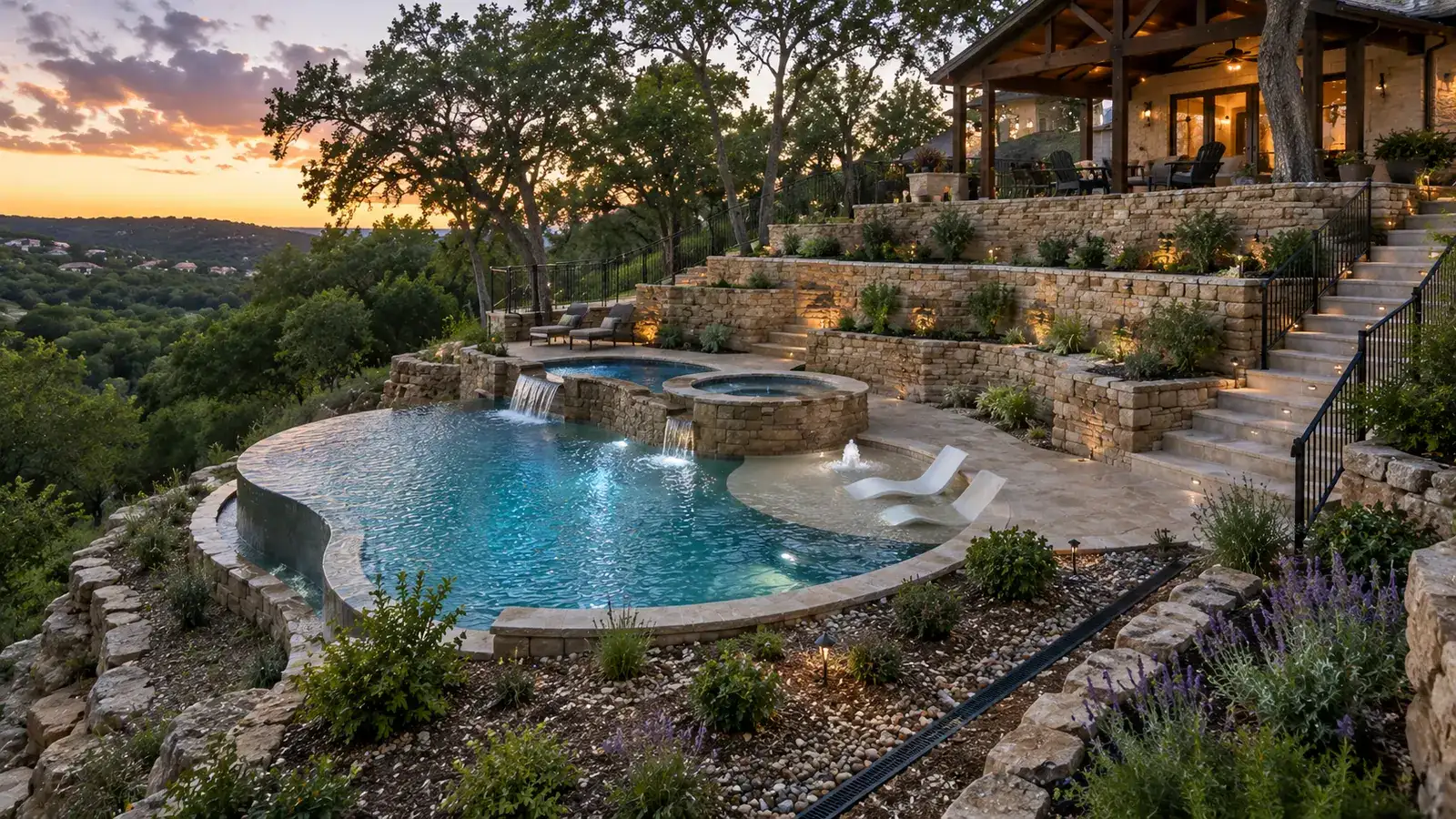
One of the biggest benefits of retaining walls for pool construction is that they help you make usable space on uneven ground. Depending on your layout, a wall can support a raised pool deck, hold back a cut into a hillside, or separate different levels of the yard.
That opens up design options that might not work on a steep lot without extra structural work.
Supporting Soil Stability
Retaining walls also help keep soil from shifting in the areas they’re built to support. They do need to be engineered properly for the site and the loads they’ll carry.
A wall near a pool may have to deal with soil pressure, water pressure, nearby structures, and where the pool sits. Poor design or construction can lead to movement, cracking, and drainage trouble.
So retaining walls should be part of the pool design from the beginning, not an afterthought.
Why Is Pool Drainage So Important?
Rain moves fast across a sloped property, especially during a big Texas storm. Without a good drainage plan, runoff can pool around your swimming area, wash away soil, or damage the surrounding hardscaping.
Good pool drainage in Killeen properties sends water away from vulnerable spots and cuts down on erosion and standing water.
A drainage plan might include surface grading, deck drains, channels, or a well-designed subsurface system. What works best depends on your slope, soil, rainfall, and the way water already moves across your land.
Just as important, water shouldn’t be directed toward your home’s foundation or your neighbors’ properties.
Drainage Solutions for Swimming Pools on Sloped Lots
Choosing the right drainage solutions for Killeen swimming pools starts with knowing where rainwater naturally flows.
A few approaches that may work on a sloped backyard:
- Surface drains: Catch water from the pool deck and other paved areas before it builds up.
- Grading and swales: Guide runoff along planned routes to proper discharge points.
- Subsurface drainage: Gravel-filled systems and perforated pipes can help manage groundwater or water behind retaining walls when designed properly.
- Retaining wall drainage: The right drainage layers and outlets relieve water pressure behind the wall.
- Erosion control: Landscaping, ground cover, and other measures help keep soil in place around the pool.
These systems need to work together. For instance, water collected behind a retaining wall needs a safe, planned outlet, not a spot where it can pile up or spill out unpredictably.
What Makes Hillside Pool Construction Different?
Hillside pool construction usually takes more coordination than a typical pool project. Excavation, retaining walls, equipment access, drainage, and pool engineering all affect each other.
For example, removing soil to level the pool area can change how water moves across your property. A retaining wall might solve an elevation problem but call for more drainage and structural planning.
That’s why sloped backyard pool construction works best with a design made for your specific site. Depending on the property, an engineer may need to evaluate the soil, the wall design, and how the pool sits against the slope.
You should also plan for possible costs like rock excavation, added structural work, drainage installation, and landscaping. Getting these on the table early means fewer surprises once construction is underway.
Build Your Killeen Pool with Confidence
When you’re building a pool on uneven ground, retaining walls and drainage matter a lot. Good planning gives you a stable pool area, keeps stormwater under control, and protects the landscape around it.
Every property is different, so the best solution depends on the slope, soil, drainage patterns, and the pool you have in mind. Working with experienced pool professionals, and qualified engineers where needed, helps bring all of it together.
If you’re planning a backyard makeover, Westbank Pools can help you explore pool designs that suit your property and the way you want to enjoy your outdoor space. With thoughtful planning and the right construction approach, your Killeen backyard can become a beautiful, practical place to relax for years to come.