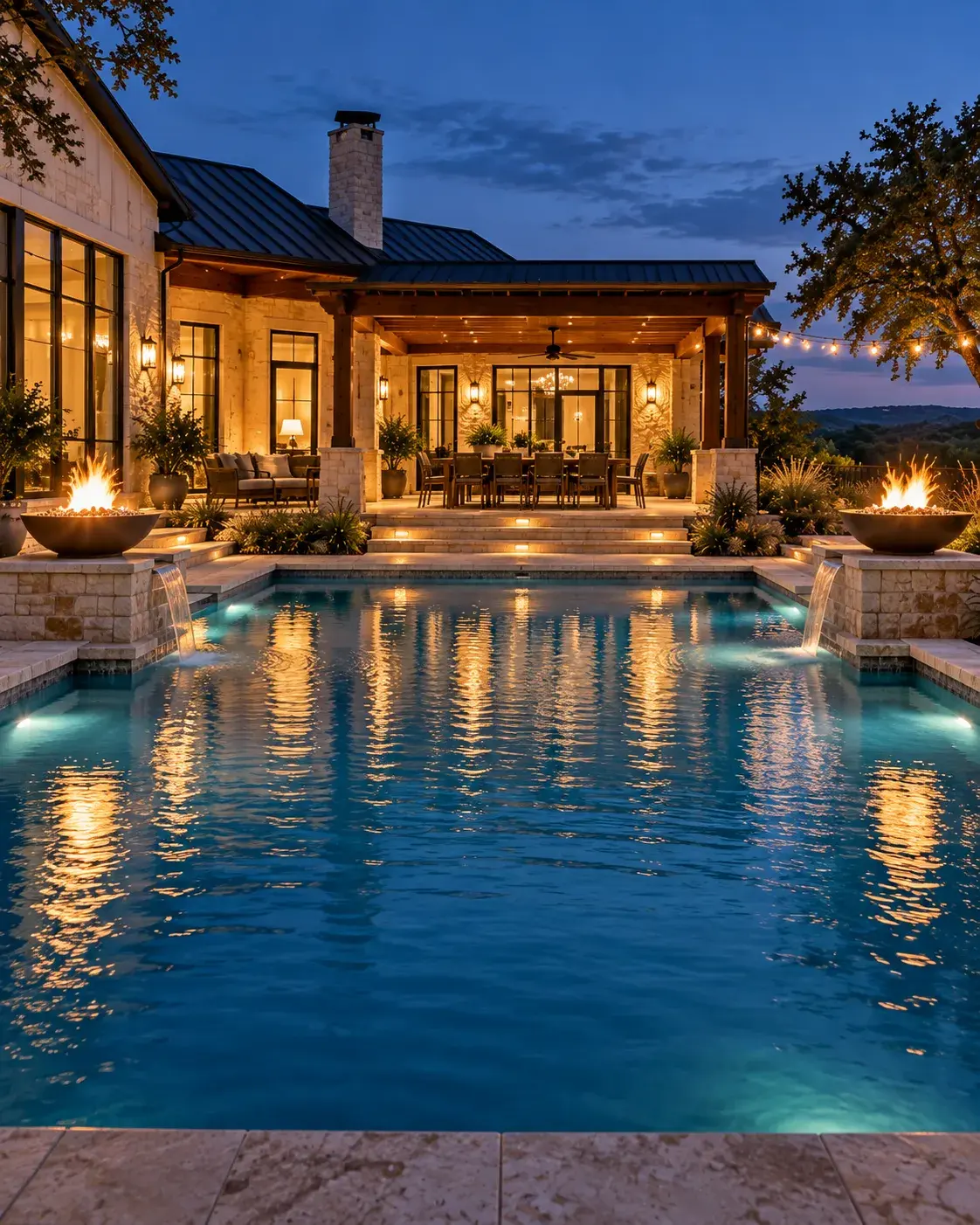
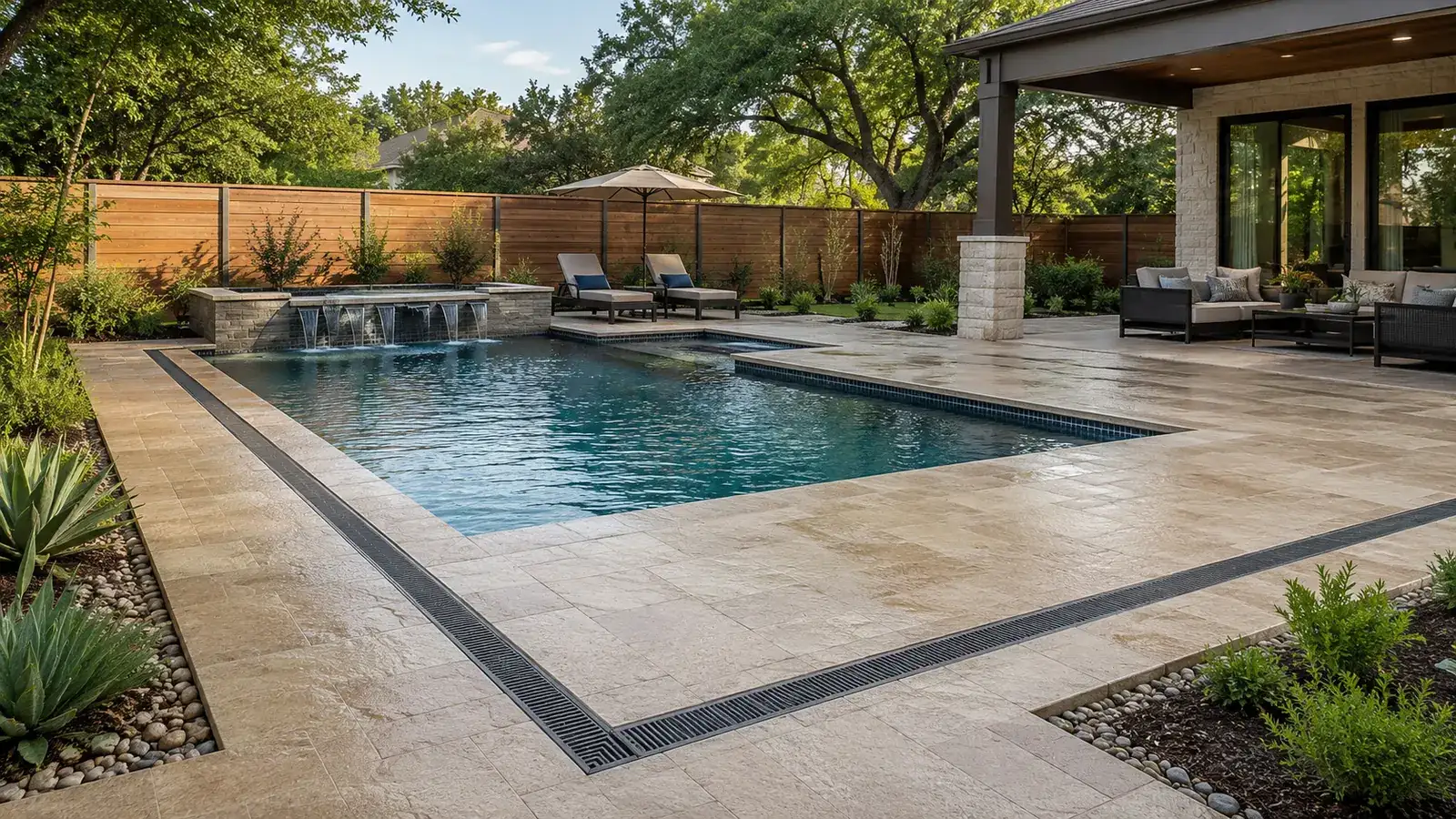
A pool can turn your backyard into a getaway. But keeping the space around it in good shape takes more than skimming leaves and checking chemicals. Drainage is the part a lot of homeowners forget about.
Rain, splashing, and discharged pool water all have to go somewhere. If there’s no good way out, that water collects, damages landscaping, softens the soil, and can even creep toward your foundation.
Whether you’re building a new pool or updating your current backyard, a little know-how can save you from costly repairs. Here’s why drainage matters and what to keep in mind.
Why does pool drainage matter and what to keep in mind?
1. Prevents Water from Collecting Around the Pool
A good pool drainage system keeps water from sitting around your pool.
Rain, overflow, and everyday splashing all end up on the deck and in nearby beds. When that water has nowhere to go, you get slippery surfaces, bugs, and slow damage to outdoor materials.
Proper grading and well-placed drainage channels move water away from the pool, so the area stays cleaner, safer, and easier to enjoy.
2. Protects Your Home’s Foundation
Runoff isn’t just a backyard issue. If water keeps flowing toward your house, your foundation can pay for it.
Soil swells when it’s wet and shrinks as it dries. Repeat that enough times and you can end up with shifting soil, erosion, and foundation trouble.
Real foundation protection from water runoff means sending water away from the house instead of letting it settle beside it. A well-planned layout controls where water travels across your property and keeps moisture from building up near your walls.
3. Prevents Common Swimming Pool Drainage Problems
Poor drainage causes problems that get pricier the longer you ignore them. Here are the usual swimming pool drainage problems:
- Standing water: Puddles on the deck make surfaces slippery and invite algae.
- Soil erosion: Steady water flow washes soil away from the pool and surrounding landscaping.
- Deck damage: Too much moisture can lead to wear, staining, or shifting in some deck materials.
- Water near the foundation: Bad runoff management can push water straight toward your home.
- Landscape damage: Plants, lawns, and garden beds don’t do well with constant soaking.
Spotting these early can save you a lot in repairs and upkeep.
4. Improves Pool Deck Safety and Durability
Between rain, splashing, and daily swims, your pool deck stays wet a lot. It needs a reliable way to shed that water.
Several pool deck drainage solutions can keep the space dry and usable. Depending on your backyard layout, you might use:
- Deck drains: Collect water from set areas and send it to a proper outlet.
- Channel drains: Catch surface water along pool edges and paved areas.
- Proper deck grading: Gives the surface the right slope to carry water away from the pool and nearby structures.
- French drains: Handle groundwater or subsurface water where site conditions call for them.
What works best depends on your soil, elevation, drainage patterns, and pool design.
5. Protects Landscaping and Surrounding Structures
Your pool is probably one piece of a bigger outdoor space with patios, walkways, retaining walls, gardens, and seating areas.
When water isn’t managed well, those features suffer. Erosion can expose plant roots, loosen landscaping edges, and leave surfaces uneven. Extra water can also push against retaining walls and other structures.
Planning backyard drainage around swimming pools protects all of it and keeps your yard looking sharp.
6. Why Drainage Planning Should Begin Before Pool Construction
Drainage shouldn’t be an afterthought. It belongs in the design from day one.
Good pool construction drainage planning starts with a look at your property’s natural slope, soil, existing drainage, and where nearby structures sit. An experienced contractor can tell where water will flow and where extra drainage is needed.
A few things to consider:
- The natural elevation and grading of your lot.
- Existing drainage outlets and underground utilities.
- Deck slopes and where drainage channels will go.
- Keeping runoff away from your foundation.
- How heavy rainfall will affect the yard.
Sorting these out before digging starts can spare you expensive fixes later.
7. Regularly Inspect Your Pool Drainage System
Even a well-designed system needs a little attention. Leaves, dirt, and grass can clog channels and stop water from moving.
Check your deck drains, gutters, downspouts, and other outlets from time to time. After a heavy rain, look for standing water, eroded soil, or odd puddles near the pool.
Fixing small problems early keeps the system working and protects everything around it.
Conclusion
Proper pool drainage protects your backyard, keeps your deck safer, and stops excess water from reaching your home’s foundation. From the right deck drains to smart grading, every detail helps.
Planning a new pool? Make drainage part of the design from the start. Westbank Pools can help you plan a custom pool that fits your backyard and gets the construction details right. With careful planning and professional pool installation, you’ll have an outdoor space that’s comfortable, functional, and built to last.