
A pool is the perfect way to beat the Texas heat. But a scorching deck can ruin the fun fast. On a hot summer afternoon, some surfaces soak up so much heat that walking barefoot, lounging by the water, or hanging out with family gets uncomfortable.
The material you choose affects comfort, safety, and how your backyard looks. If you’re planning a new pool or upgrading your current one, knowing which materials hold up best in the heat helps you spend wisely.
What Is the Best Pool Deck Material for Hot Weather?
The best pool deck material for hot weather depends on color, texture, density, finish, and how much direct sun it gets. As a rule, light-colored materials reflect more sunlight and stay cooler than dark ones that absorb heat.
For Texas homeowners, popular picks include travertine, light-colored concrete, textured concrete finishes, and certain specialized pavers. Each one has its own mix of comfort, durability, upkeep, and cost. Here’s a closer look at the best options for pool decking in Texas heat.
4 Best options for pool decking in Texas heat
1. Travertine: Natural Stone That Stays Relatively Cool
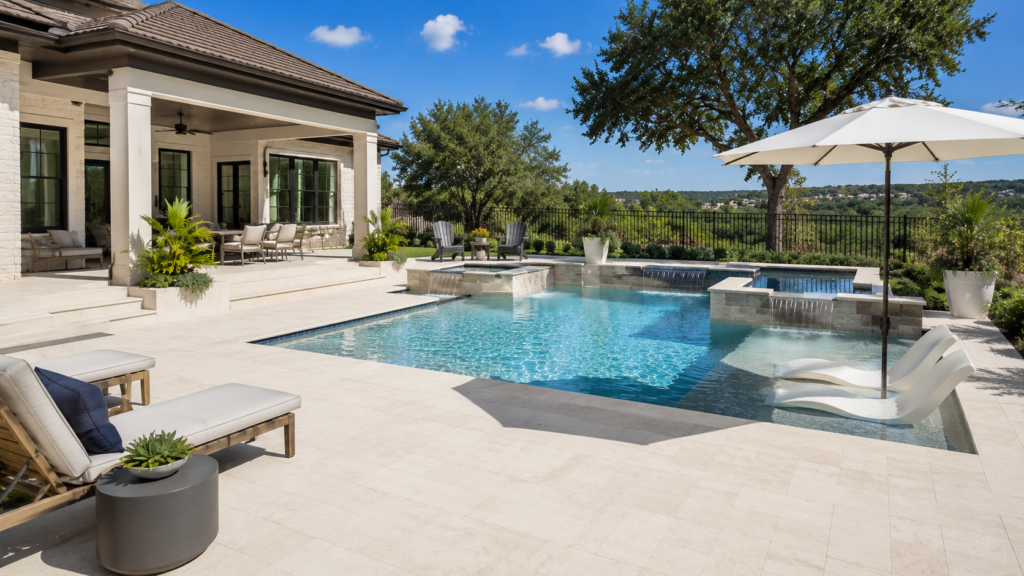
Travertine is a favorite if you want an elegant poolside look without a hot-foot penalty. This natural stone comes in light shades like ivory, beige, and cream, which helps limit heat absorption.
In direct sun, it often feels more comfortable underfoot than many darker paving materials. Its natural texture can also give you good traction around wet areas, depending on the finish.
Not all travertine performs the same, though. Stone density, color, surface treatment, and installation quality all matter. It may also need sealing and some regular upkeep.
If you want a good-looking, cool pool deck, light-colored travertine is worth a look.
2. Light-Colored Concrete: Practical and Versatile
Concrete is one of the most flexible pool deck options. It can be poured in nearly any shape, finished in decorative ways, and designed to match almost any backyard.
Light-colored concrete generally absorbs less solar heat than darker concrete. Textured finishes add traction, which helps where water splashes often.
Some homeowners go a step further with specialized concrete coatings or cool-deck finishes made to improve surface comfort. These can help reduce heat buildup, though results vary with the product, color, application, and weather.
If you want a balance of looks, flexibility, and budget, concrete is a strong choice for pool decking in Texas heat.
3. Light-Colored Pavers: Style and Flexibility
Pool deck pavers come in materials like concrete and natural stone, so the design options are endless. You can lay them in different patterns for a polished, custom look.
Light-colored pavers may stay cooler than darker ones, which suits sunny Texas backyards. And if one gets damaged, you can replace just that piece, which can make some repairs simpler.
Pavers vary a lot in how much heat they hold. Thickness, composition, color, and finish all play a part.
When comparing options, ask your pool builder which pavers and finishes work best for your yard’s sun exposure and how you plan to use it.
4. Specialized Cool-Deck Finishes: Built for Comfort
Cool-deck finishes are designed to make poolside surfaces more comfortable in hot weather. Depending on the system, they may use textured coatings, reflective colors, or surface treatments that cut down on heat buildup.
They’re especially handy if you want to refresh an existing concrete deck without replacing the whole surface.
Before you pick a product, check its slip resistance, UV durability, maintenance needs, and compatibility with your current concrete. A well-installed system can improve both the look and the usability of your pool area, but no finish stays cool in every condition.
What Makes a Pool Deck Hotter?
Even the best materials can warm up under strong Texas sun. A few things affect surface temperature:
- Color: Darker surfaces absorb more sunlight than lighter ones.
- Sun exposure: Decks with no shade heat up fast in the afternoon.
- Material: Different stones, concrete mixes, and coatings hold heat differently.
- Surface finish: Texture and finish affect both comfort and traction.
- Air flow: Open, breezy spaces tend to feel more comfortable than enclosed ones.
Shade structures, umbrellas, and smart landscaping can make your pool area even more comfortable.
How to Choose the Best Pool Deck for Texas Summers
When you compare heat-resistant pool decking, don’t look at surface temperature alone. Your deck also needs reliable grip when wet, durability for regular use, and a look that fits your home.
Ask your pool deck contractor about slip resistance, drainage, UV exposure, upkeep, and how the material handles direct sun. If you can, check out samples outdoors on a warm day before you decide.
The best choice is the one that balances comfort, safety, durability, and good looks for your backyard.
Create a More Comfortable Poolside with Westbank Pools
The right pool deck material can turn your backyard into a place you actually want to swim, relax, and entertain all summer. Whether you go with natural travertine, light-colored concrete, or a cool-deck finish, the best pick depends on your style, budget, and outdoor conditions.
Westbank Pools can help you explore pool design and outdoor living options that fit your property and lifestyle. With careful material selection and professional planning, you’ll have a beautiful poolside space ready for sunny afternoons and family gatherings.

