
You run the pump, keep the water moving, and expect a clear pool. Then the water goes green anyway. It’s annoying, especially after all the time and money you’ve put into keeping the pool in good shape.
Here’s the thing: a running pump is only one piece of pool care. Green water usually points to algae, a chemistry imbalance, or a filtration problem. Once you know the green pool water causes, you can figure out what’s going on and clear things up before it gets worse.
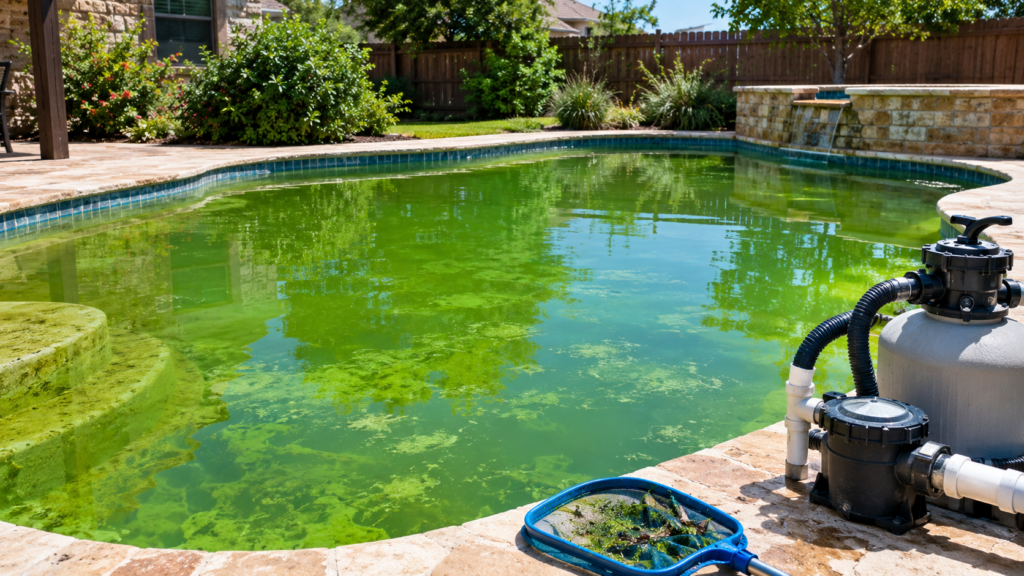
What Causes Pool Water to Turn Green?
A few different things can turn a pool green. Finding the real cause is the first step to fixing it.
1. Algae Growth
Algae is the most common culprit. It loves warm water, and it takes off when sanitizer is low or the water chemistry has drifted.
Your pump can run for hours every day and algae will still grow if chlorine is too low. Watch for cloudy water, slimy pool walls, or green patches around steps and corners.
Regular brushing, the right sanitizer level, and good filtration keep algae from spreading.
2. Low Chlorine Levels
Chlorine kills algae, bacteria, and other contaminants. When it drops below the recommended range, algae can multiply fast, especially in a hot Texas summer.
Heavy use, sunlight, rain, and leaves and other debris all use up chlorine. Test your water regularly and you’ll catch the problem before the pool turns green.
3. Poor Filtration
The pump moves water through the filter, but circulation alone doesn’t clean everything out. A dirty filter, a clogged skimmer or pump basket, or weak circulation keeps the system from doing its job.
If the filter needs cleaning or the pump isn’t moving enough water, algae and tiny particles stay in the pool.
4. Metals in the Water
Sometimes it isn’t algae at all. Dissolved metals, copper in particular, can give water a green or blue-green tint. They can come from your water supply, or from certain pool chemicals and equipment.
If the water is green but the walls feel clean and there’s no slimy algae, test for metals before you add more chlorine.
Why Is My Pool Green but Chemicals Are Balanced?
Plenty of pool owners run into this one. The test strip looks fine, but the water is still green or cloudy.
A few things could be going on.
First, your chlorine reading may not tell the whole story. Combined chlorine forms when chlorine reacts with contaminants, and it can mean the water still needs treatment. Checking just one number can miss the real problem.
Second, algae may still be around even after your sanitizer levels improve. Killing algae doesn’t make the dead stuff vanish. Your filter needs time to catch what’s left.
Finally, metals can tint the water without any of the usual signs of algae.
If you’re asking yourself why my pool is green but the chemicals are balanced, run a full water test, look over your filtration system, and check for signs of algae or metals before you pick a treatment.
How to Clear Green Pool Water
Learning how to clear green pool water starts with fixing the cause, not just running the pump longer.
Here’s the general process:
- Test the water: Check free chlorine, pH, alkalinity, and anything else that applies. Test for metals if the color suggests contamination.
- Clean the pool: Take out leaves and debris, brush the walls and floor, and empty the skimmer and pump baskets.
- Balance the water: Adjust pH and the other levels following your pool professional’s advice and the product instructions.
- Treat algae if it’s there: Use a suitable algae treatment for your pool’s condition and follow the manufacturer’s directions.
- Run the filter: Give it enough time to circulate, and clean or backwash it as recommended for your filter type.
- Retest: Keep checking sanitizer levels and clarity until the pool is back to normal.
Don’t mix pool chemicals, and don’t stack several treatments without checking that they’re compatible. If the water stays green even with good maintenance, professional testing can save you from using chemicals you don’t need.
Pool Algae Causes and Treatment: How to Prevent Future Problems
Knowing pool algae causes and treatment saves you time and money all season.
Keep chlorine in range, hold pH where it should be, brush the surfaces often, and clear debris before it piles up. Check your pump and filter regularly, and make sure water is circulating through the whole pool.
In a hot climate like Texas, heat and strong sun make upkeep harder. After heavy rain, a pool party, or a long stretch of hot weather, test your water more often.
Staying on top of routine care is almost always easier and cheaper than rescuing a badly contaminated pool.
Frequently Asked Questions
1. Can a pool turn green overnight?
Yes. When conditions are right, algae can multiply fast, especially if sanitizer is low and it’s hot out.
2. Will running the pump longer clear green pool water?
Not by itself. The pump helps with circulation and filtering, but algae usually needs a chemical treatment too. More run time alone often won’t fix it.
3. How long does it take to clear a green pool?
A mild case may clear in a day or two. A bad one can take several days or more, depending on how much algae there is, how well the filter works, and the water chemistry.
4. Can I swim in a green pool?
It’s best to wait. Hold off until you know the cause, the water is clear enough to see through safely, and your sanitizer and chemical levels are where they should be. Green water can hide hazards and often means the water isn’t properly sanitized.
5. Does green pool water always mean algae?
No. Metals like copper can color the water too, so test before you choose a treatment.
Conclusion
A running pump doesn’t guarantee clean, clear water. Algae, low chlorine, filtration trouble, and metals can all turn a pool green.
Test your water regularly, keep your filtration system in good shape, and deal with problems early. Do that and you’ll have a healthier, more inviting pool.
Whether you want advice on pool maintenance or you’re thinking about a new backyard pool, Westbank Pools can help you find solutions for an outdoor space you’ll love. With the right care, keeping your pool clear gets a lot simpler.

