
Planning a pool in Austin? The shape and size are the fun part. But what’s under your backyard matters just as much. Austin’s soil affects how your pool gets dug, how it’s built, how water drains around it, and how well it holds up over the years.
Get to know your soil before the work starts and you’ll dodge a lot of headaches. That’s true whether you’re planning a small plunge pool or a full custom gunite pool. Here’s a look at the common Austin soil types for pool construction and why they matter.
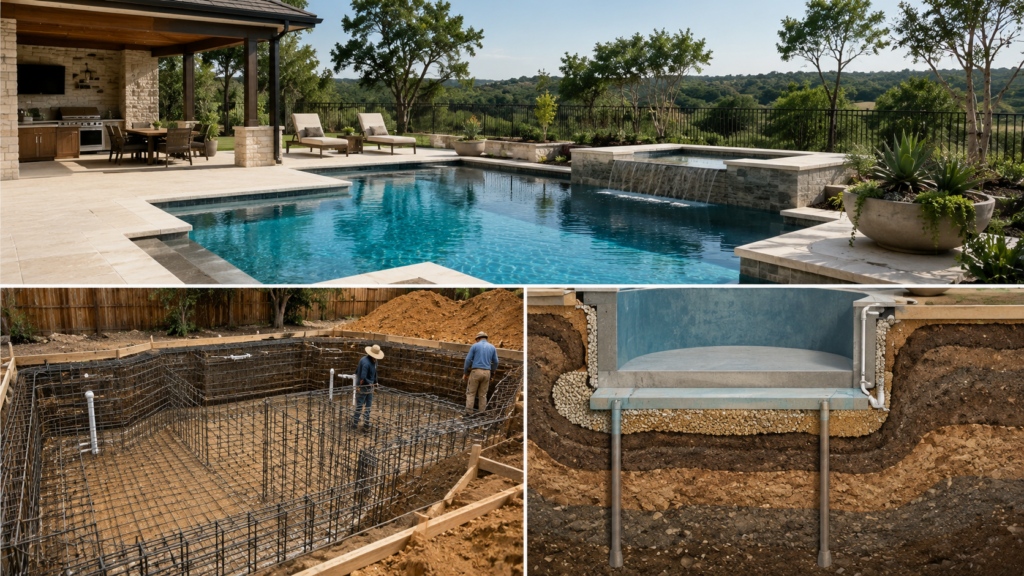
Understanding Austin Soil Types for Pool Construction
Soil around Austin changes a lot, sometimes from one yard to the next. Some properties sit on expansive clay. Others have shallow limestone, rocky ground, or a mix of clay and rock.
Those differences change how easy the dig will be and how the ground reacts when moisture levels shift.
1. Expansive Clay Soil
For swimming pool construction in Austin TX, expansive clay is one of the biggest things to plan around. It swells when it takes on water and shrinks as it dries out.
All that swelling and shrinking moves the ground around your pool. If the site isn’t checked and handled properly, you can end up with cracks, uneven settling, or damage to the decking and hardscape nearby.
2. Rocky and Limestone Soil
Plenty of Austin lots have limestone or other rock close to the surface. Digging through it can be tough and may call for special equipment and extra labor.
Rock can give you a solid base in some cases, but that’s not a guarantee. A good contractor looks at the geology, the quality of the rock, and what it will take to excavate before choosing how to build.
3. Mixed or Variable Soil
Some backyards have different soils at different depths. You might find clay on top of rock, or soft ground right next to firmer ground.
That kind of variation changes how the ground supports a pool. A site-specific assessment helps your builder spot trouble before the dig begins.
How Does Austin Expansive Clay Soil Affect Pool Construction?
Austin expansive clay soil deserves extra attention because moisture swings can shift the ground around a pool.
When it’s wet, clay can swell. When it’s dry, it shrinks and cracks. If the design doesn’t account for that, it can affect the pool shell, plumbing lines, surrounding concrete, and decks.
How much risk you face depends on the depth and type of clay, seasonal moisture, drainage, and how the pool is engineered.
To manage it, builders may suggest engineered structural details, the right reinforcement, careful backfilling, and good drainage. What works depends on your property, not a one-size-fits-all fix for every Austin yard.
Why Pool Foundation and Soil Conditions in Austin Matter
The link between pool foundation and soil conditions in Austin has a big say in how well your pool lasts.
Before any digging, your contractor should check for uneven soil, groundwater, drainage problems, and anything buried that could get in the way. Depending on the project, you may need a geotechnical investigation or engineering recommendations.
What they find can shape several decisions:
- Pool shell design: Soil conditions can change the engineering and reinforcement needed.
- Excavation planning: Rock, clay, and mixed soils each call for a different dig.
- Drainage: Good drainage keeps water from pooling and limits moisture swings around the pool.
- Plumbing: Proper installation and backfilling protect buried pipes from ground movement.
- Decking and landscaping: Good drainage and ground prep cut down on movement problems around the finished pool.
Sorting this out early can save you from surprise delays, extra costs, and repairs down the road.
How Soil Conditions Can Affect Pool Construction Costs
Soil can move your pool budget. Rocky ground may mean more excavation work, while expansive clay may call for added engineering, drainage upgrades, or special construction details.
Backyard access, groundwater, soil removal, and equipment needs can add to the cost too.
A professional site evaluation brings these issues up early, so your estimate is more realistic and you can plan around it. Soil-related work might raise the upfront cost, but doing it right protects your pool and the space around it for years.
Build Your Austin Pool with Confidence
Knowing how soil affects pool construction is the first step toward a pool that lasts. Whether you’ve got expansive clay, rocky limestone, or a mix, every property has its own challenges.
Work with a pool builder who knows local ground conditions, so the excavation, drainage, structure, and installation are all planned the right way.
Westbank Pools can help you plan a custom pool that fits your property and your backyard goals. With a careful site evaluation and the right build approach, you’ll have an outdoor space you can enjoy for years.

