
A beautiful pool can become the heart of your backyard, but safety needs to be baked into that design from the start. Pool decks are constantly dealing with water, sunscreen, wet feet, and whatever the weather throws at them. Without the right surface underfoot, all of that adds up to a real risk of slips and falls.
Choosing slip-resistant pool deck materials helps create a safer space without giving up the style and comfort you actually want. From textured concrete to specialty coatings, homeowners today have plenty of ways to build a pool area that’s both attractive and functional.
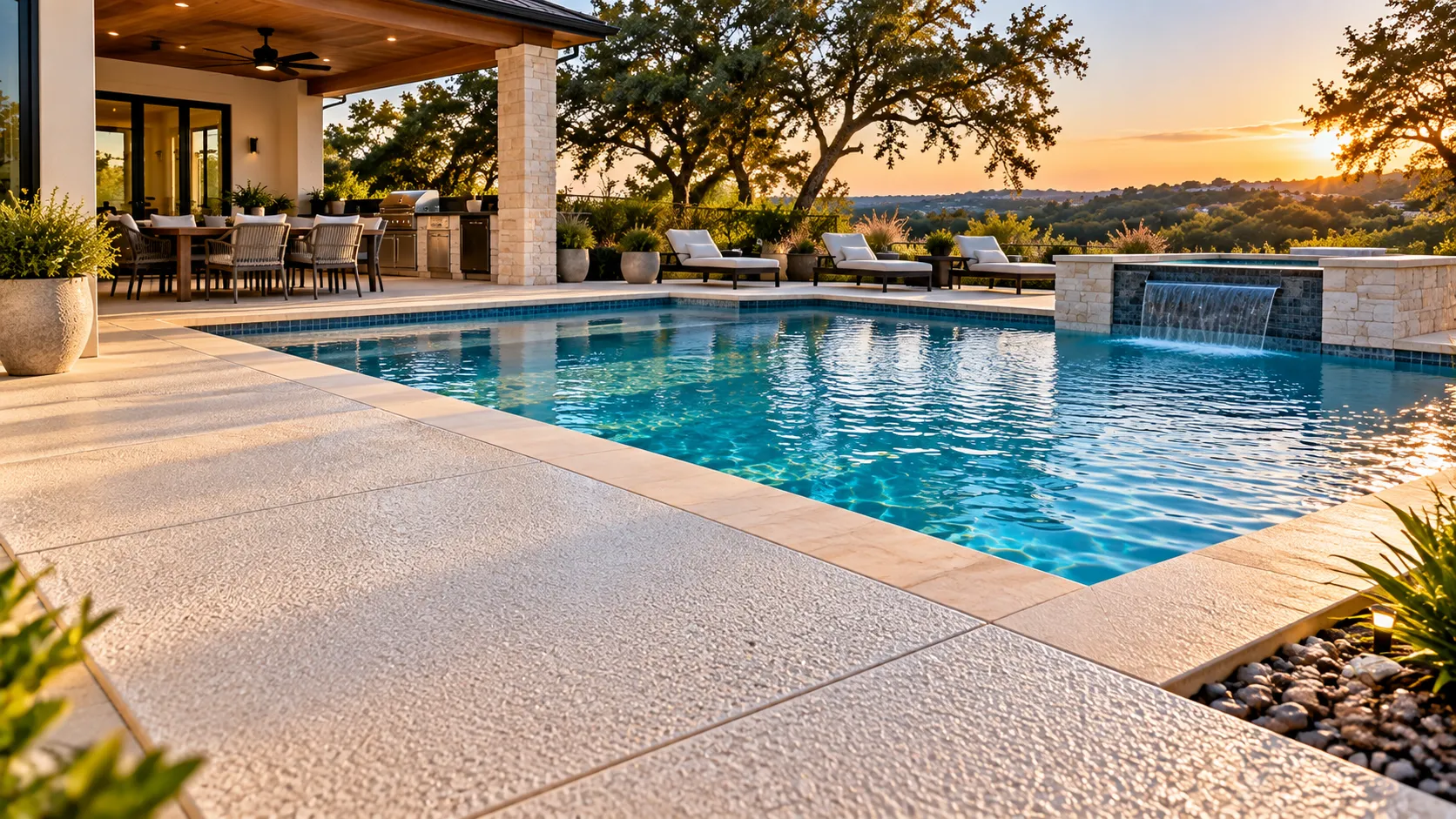
Why Pool Deck Safety Matters
A wet pool deck is naturally trickier to walk across. Smooth or overly polished surfaces can turn slippery the moment water hits them, which is exactly why picking the right material matters so much when planning a pool.
Good pool deck safety starts with a surface that keeps its traction even when wet. But that’s not the whole story — drainage, proper installation, ongoing maintenance, and keeping the area clear of algae and debris all matter just as much.
The goal isn’t finding a surface that just looks nice when it’s bone dry. It needs to hold up under the real, messy conditions of a backyard pool that actually gets used.
What Makes a Pool Deck Slip Resistant?
A non-slip pool deck usually has some kind of surface texture that improves grip underfoot. That texture has to be dialed in carefully, though — too rough, and it’s uncomfortable on bare feet; too smooth, and you lose the traction you were going for in the first place.
Some pool deck materials are also designed with finishes that help water drain away instead of sitting in puddles.
When you’re weighing surfaces, think about how it feels under bare feet, how it handles water, and how much upkeep it’s going to need.
1. Textured Concrete
Concrete is one of the most flexible choices out there for pool decks. It can be textured, stamped, or finished in a bunch of different ways to boost traction.
Since concrete can be customized on color, pattern, and texture, it fits with just about any backyard design you’re going for.
2. Cool Deck Surfaces
If you’re in Texas, think about how hot that deck gets sitting in direct sun all day. Cool deck materials are built specifically to keep the surface more comfortable underfoot.
Some cool-deck systems combine textured finishes with that heat-reducing benefit, giving you both comfort and grip. That combo is especially useful for pools that catch a lot of afternoon sun.
3. Natural Stone With a Textured Finish
Natural stone gives a pool that high-end look, but not every type of stone handles wet environments equally well.
If you’re considering natural stone, look for finishes that actually provide traction. A textured or naturally cleft surface usually grips better than a highly polished one.
4. Porcelain and Outdoor Tile
Outdoor-rated porcelain and tile can give a pool deck a sleek, modern look. For wet areas though, it’s essential to stick with products actually designed for exterior and poolside use.
Look for textured finishes and legit slip-resistance ratings, rather than picking tile based purely on how it looks.
5. Slip-Resistant Pool Coatings
Coatings are another way to improve an existing concrete pool deck. Depending on the system, these coatings can add texture, color, and give an aging surface a fresh look.
A well-chosen coating can transform a tired-looking deck while improving traction at the same time. But surface prep is everything here — the existing concrete needs to be clean, structurally sound, and properly prepped before any coating goes on.
Choosing the Best Pool Deck Materials
What counts as the “best” pool deck material really depends on your climate, pool design, how much maintenance you’re willing to do, your budget, and how the space gets used.
For Texas homeowners, heat resistance deserves extra attention. A surface that gets scorching hot can make barefoot walking miserable, even if it’s great at preventing slips.
Drainage, durability, cleaning demands, and how the material looks next to your pool’s coping, landscaping, and outdoor living areas all matter too.
How to Maintain Safe Pool Deck Surfaces
Even the best pool deck surfaces need upkeep. Dirt, algae, leaves, and standing water can all chip away at traction over time.
Regular cleaning, staying on top of drainage issues, and fixing cracks or damage as they come up will help keep the surface performing the way it should. It’s also worth following the manufacturer’s maintenance guidelines for any specialty coatings or materials.
Designing a Safer, More Comfortable Pool Area
Slip-resistant doesn’t have to mean industrial or boring. Modern materials come in a huge range of colors, textures, patterns, and finishes.
Combine a slip-resistant surface with smart drainage, good lighting, and thoughtful landscaping, and you get a pool area that feels stylish and secure at the same time.
Conclusion
Choosing the right slip resistant pool deck materials is an important step toward creating a safer and more comfortable backyard. From textured concrete and cool-deck finishes to natural stone and specialized coatings, homeowners have plenty of options to balance traction, appearance, durability, and comfort. If you’re planning a new luxury pool installation or upgrading an existing outdoor space, Westbank Pools can help you select and design pool surroundings that complement your lifestyle while keeping safety at the forefront.

