
Building a swimming pool can transform an Austin backyard into a private retreat, but the process involves more than choosing the shape, finish, and features you want. Before excavation begins, homeowners need to understand the applicable permits, inspections, safety requirements, and local regulations.
For anyone researching Austin pool permit requirements, knowing what to expect can make the planning process smoother and help prevent costly delays.
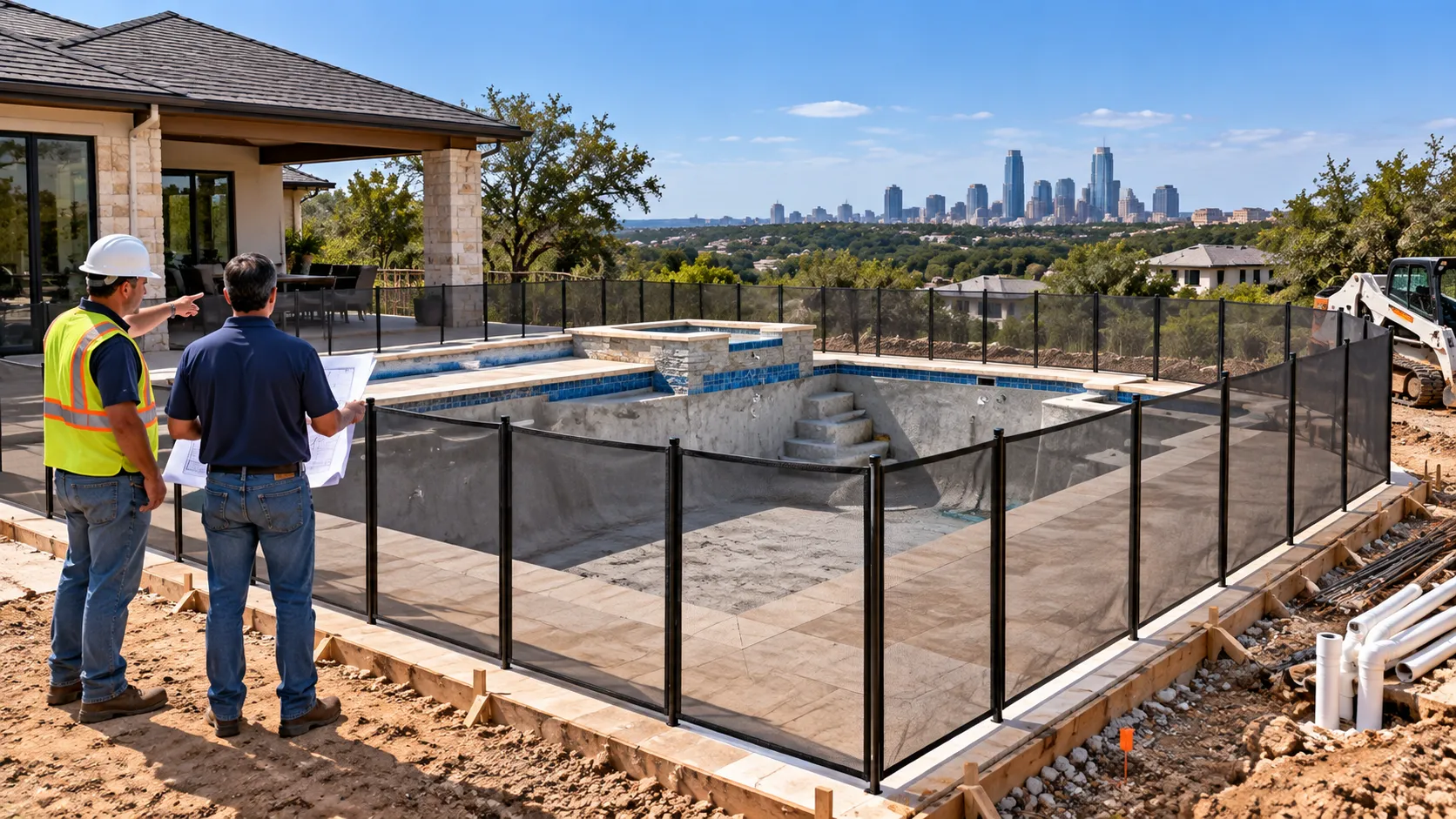
Do You Need a Permit to Build a Pool in Austin?
For a typical residential pool, a building permit is generally required. Austin’s current permitting information specifically lists pools and uncovered decks among residential permit categories, while the city’s code requires permits for swimming pools over 24 inches deep.
A prefabricated pool that is less than 24 inches deep may fall under an exemption if it meets the applicable requirements.
Because individual properties can have additional site-specific requirements, homeowners should verify the project with Austin Development Services before construction begins.
Pool Construction Permits in Austin TX
The main permit homeowners should consider is the residential building permit associated with the pool project. Pool construction permits Austin TX requirements can depend on the project’s scope, property conditions, and location.
Plans may need to show the proposed pool, property boundaries, setbacks, existing structures, equipment, and other relevant site information. Depending on the project, additional trade or site-related approvals may also be necessary.
Austin provides residential permitting resources and an interactive guide to help homeowners determine which applications apply to their project.
Swimming Pool Building Permit Austin: What Happens During the Process?
The Swimming pool building permit Austin process typically starts with preparing the required plans and application documents. The application is then reviewed before the permit can be issued.
Once the permit is approved and activated, construction can begin according to the approved plans. Required inspections take place during appropriate stages of construction. Austin explains that inspections are used to confirm that permitted work complies with applicable building codes and approved plans.
Having an experienced pool builder coordinate the process can help homeowners understand what needs to be submitted and when inspections should be scheduled.
Understanding Austin Residential Pool Regulations
Austin residential pool regulations aren’t limited to the pool itself. Safety barriers, property conditions, construction requirements, and other applicable codes can affect your project.
One particularly important consideration is the pool barrier. Austin’s fencing regulations state that swimming pool barriers must comply with the applicable Swimming Pool and Spa Code and safe-fencing requirements.
Your pool design should therefore account for safety requirements from the beginning rather than treating fencing as an afterthought.
Pool Fence Requirements Austin TX
Understanding pool fence requirements Austin TX homeowners face is essential before construction starts.
A barrier used around a swimming pool must follow the applicable pool and spa safety regulations. Depending on the property and fence design, additional fencing permits may also apply. For example, Austin requires permits for certain fences based on height, floodplain location, or placement.
Your pool professional can help identify how the proposed pool, gates, barriers, and surrounding structures should work together.
What Are the Pool Inspection Requirements in Austin?
Inspections are an important part of the construction process. The pool inspection requirements Austin homeowners encounter depend on the type and scope of the project.
For private residential pools, don’t confuse the building inspection process with Austin Public Health’s operational pool permitting. The City states that an operational aquatic-facility permit applies to public and semi-public facilities, while a permit is not required simply to operate a private residential pool.
Building inspections, meanwhile, help verify that permitted construction has been completed according to applicable requirements.
How to Start a Pool Permit Application in Austin
For homeowners beginning a pool permit application in Austin, the first step is understanding which permit applies to the project. Austin’s AB+C Portal is used to manage many permitting activities, including applications, fees, and certain inspection scheduling.
It’s also important to check whether your property has conditions that could affect the project, such as floodplain considerations, easements, or other site restrictions.
Work With the Requirements, Not Against Them
Permits may seem like an extra step, but they help ensure that a pool is designed and constructed according to applicable safety and building requirements. Starting construction without the necessary approvals can create delays and complications later.
A knowledgeable pool builder can help homeowners plan the project around permitting, inspections, safety barriers, and the property’s specific conditions.
Conclusion
Understanding Austin pool permit requirements before breaking ground can help homeowners plan a smoother and more organized pool project. From the residential building permit and inspections to pool barriers and site-specific regulations, each step matters when creating a safe backyard pool. If you’re planning a custom pool in Austin, Westbank Pools can help you navigate the planning process and create an outdoor space designed around your home, lifestyle, and Texas living.

